Monday, February 15, 2016

Phnom Penh

7 Feb 2016

Kg. Kenchong, Phnom Penh

I was honoured to be invited by the school board to officiate the opening ceremony of the new School Library of the Kg Kechong Primary School. This school library was funded by the Alumni of Tun Fatimah School.

Kg Kenchong Primary School was mooted by a group of IPGKTB lecturers which include Ustaz Rafuan, Ustaz Harun, Dr. Razak and many more. The school was established in 2010 with 3 classrooms but now it has 6 classrooms.
Officiating the opening ceremony of the School Library. The establishment of the library was funded by Tun Fatimah School Alumni. In the middle is the Chieftain of the village. On the far left is Ustaz Rafuan, a key person in establishing the school and the library
Ustaz Rafuan and his team had been working tirelessly in collecting funds and procuring a piece of land in the village. Now he could proudly stands at the school which has 5 full-time teachers and more than 200 pupils.
A signature of the official opening of the school library

A Group picture. Sitting (L-R): Ustaz Harun, Ustaz Rafuan, Me, Village Head, Dr. Razak, Ustaz Hafizan
Those at the back are teachers of the school

Some of the school children attending one of the programs held at the mosque 

Delivering a donation from Malaysian community to the school headmaster

Ustaz Harun lecturing on pedagogy for the teachers

A typical house which are common in this village

Dr. Razak with teacher and students

Students browsing books in the new library

Monday, December 21, 2015

4th RCELAM 2015: 16 - 19 November 2015

Keynote Speaker 1 : Emeritus Prof. Dr. John MacBeath, Cambridge University, England.


Keynote Speaker 2 : Tan Sri Yahaya Ibrahim, Malaysia

Keynote Speaker 3 : Emeritus Prof. Dato' Dr. Ibrahim Bajunid, Malaysia
Presenter from India : Prof. Dr. Kannapan Jayaraman

Presenter from Kazakhstan : Dr. Maganat, KIMEP University, Almaty
Prof. Dr. Ramlee Mustaffa from UPSI, Malaysia

Presenter from Pakistan : Ms. Shabana Tunio

Presenter from Malaysia : Ms Inas Zulkipli

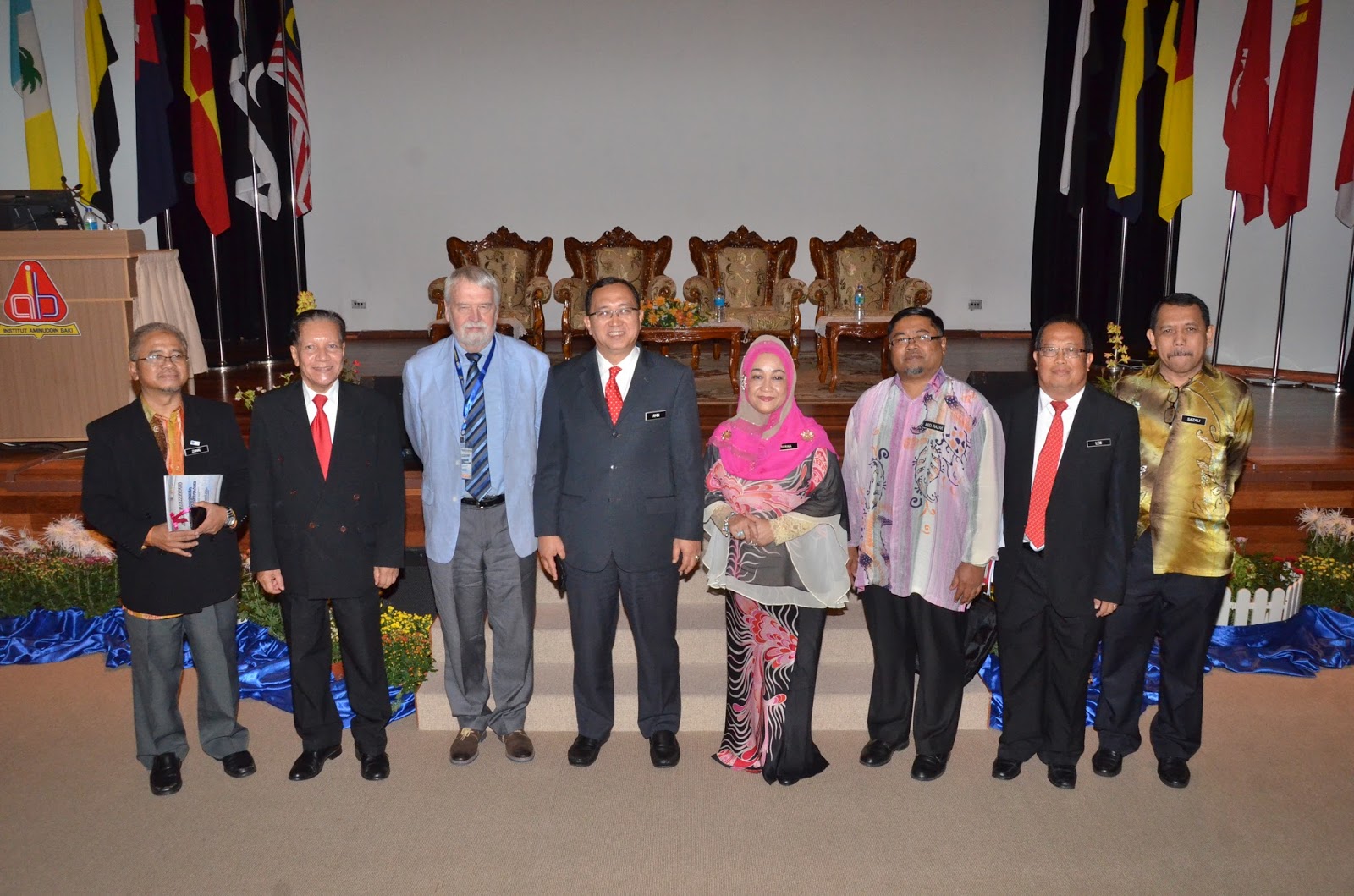
L-R: Zanal (IAB Northern Branch Director), Emeritus Prof. Dato' Dr. Ibrahim, Emeritus Prof. Dr. John MacBeath, Dato' Dr. Amin Senin (Deputy Director-General of Education Malaysia), Serina (IAB's Director), Abd Razak (IAB Genting Highlands Branch Director), Lew Yeok Leng (IAB Sabah Branch Director), Me


With colleagues from Maldives Visal and Ahmed (3rd & 4th from left), and Suzana RCELAM Secretariat.


Ahmed Mohamed*[1], Visal Moosa[2], Sazali Yusoff [3]

ABSTRACT

Schools entail instructional leadership where several people interact from diverse cultures. This research attempts to explore the relationship between organizational culture, instructional leadership and trust among teachers in schools of Maldives. The instruments used were School Culture Survey (Gruemert & Valentine, 1998), Principal Instructional Management Rating Scale, PIMPRS (Hallinger, 1987) and Trust Survey (Scott, 1981) which are Likert-type scale with 1 to 5 points. The School Culture Survey has six dimensions; Collaborative leadership, teacher collaboration, professional development, unity of purpose, collegial support and learning partnership. The PIMPRS has three dimensions, whereas the Trust Survey is uni-dimensional instrument. A total of 145 teachers were selected conveniently for the study.  The data were statistically analysed using descriptive and inferential statistics. The result showed that one dimension of School Culture – “professional development” - was significantly correlated to three dimensions of instructional leadership. Also, “collaborative leadership” and “unity of purpose” dimensions of school culture were significantly correlated with two dimensions of instructional leadership. The findings indicated that dimensions of school culture – “collaborative leadership” and “collegial support” – were significantly correlated with Trust. The other two school culture dimensions – “teacher collaboration” and “learning partnership” - did not influence significantly to both Instructional Leadership and Trust. However, the study revealed that all dimensions of instructional leadership were significantly correlated with trust. Based on the statistical results, implications of the findings were discussed in the context of school culture, leadership and trust. Consequently, suggestions for future research were also explored.

Key words: school culture, leadership, trust


* Corresponding Author:
[1] President of ‘Principals’ Association of Maldives’, Maldives
[2] Vice-president of ‘Principals’ Association of Maldives’, Maldives
[3] Institut Aminuddin Baki (IAB), Ministry of Education Malaysia 

Monday, November 30, 2015

Near East University, Nicosia, Cyprus. 26 - 27 Nov. 2015


I was given the opportunity by Near East University, Nicosia, Cyprus to deliver a speech at a Seminar which was held at the university campus. The seminar was attended by Deans, Directors, Professors, senior lecturers and post-graduate students. The title of my speech was 'Academic Visibility, Trust and Leadership'.


Delivering a speech on Academic Visibility, Trust and Leadership

Q & A session

Moderated by Prof. Dr. Nedeme, DirectorCenter of Excellence and Societal Research and Development Center Near East University

Audience include Directors of Institutes/Centres, Lecturers and post-graduate students

Exchange of token of gift


A report by the university can be read at this link :


Wednesday, June 3, 2015

Training for Educational Leaders from 14 Countries

1 June 2015 - Malaysian Technical Cooperation Program (MTCP) at Grand Lexis Hotel Port Dickson

Participants from Malawi, Vietnam, Maldives, Cambodia, Thailand, Myammar

Participants from Uzbekistan, Timor Leste, Phillipine, Indonesia, Laos, Sri Lanka, Solomon Island, Bhutan


Lecturing on Contemporary Educational Leadership Theories


Tuesday, June 2, 2015

PROFESSIONAL VISIT TO MOSCOW 2015

Briefing given by H.E. Dato' Zainol Abidin Omar, the Ambassador of Malaysia to Russia

A gift of token for the Moscow State University. 

A group photo with Malaysian Embassy Staff

Precouncil meeting with Ms. Fauzana, Education Attache.

Discussion with tour guide

Assoc. Prof. Kukushkina delivering her speech in Malay Language


Picture of Nobel Laureates, the product of Moscow State University. Most of the laureates were in Physics, Chemistry and Engineering

With Assoc. Prof. Kukushkina and her student majoring in Malaysian/Indonesian studies

Moscow State University

Time off for  night river cruise

The Kremlin, a fortified complex at the heart of Moscow, overlooking the Moskva River to the south, Saint Basil's Cathedral and Red Square to the east, and the Alexander Garden to the west.

Thursday, March 12, 2015

13th ICAM 2006 - Lisbon, Portugal

13th Annual (2006)
International Conference on Advances in Management (ICAM)
c/o Center for Advanced Studies in Management
1574 Mallory Court
Bowling Green, KY 42103 , USA
Phone & Fax: 270-782-2601

Receipt

March 21, 2006

Received with thanks 2006 ICAM Registration Fee (U.S.$400.00) from Dr. Sazali Yusoff, INSTITUT AMINUDDIN BAKI CAW. UTARA, MINISTRY OF EDUCATION


Afzal RahimPresident, ICAM
c/o Center for Advanced Studies in Management
1574 Mallory Court
Bowling Green , KY 42103 , USA
Phone & Fax: 270-782-2601
Email: icam2000@aol.com


With presenters from New Zealand, South Korea, USA, Portugal

Mr. Afzal Rahim, the President of ICAM delivering his welcoming speech

Lisboa Central with underground metro public transportation

Tram that trespasses through city centre and nearby scenic hill overlooking Lisbon


One of the Lisboa landmark

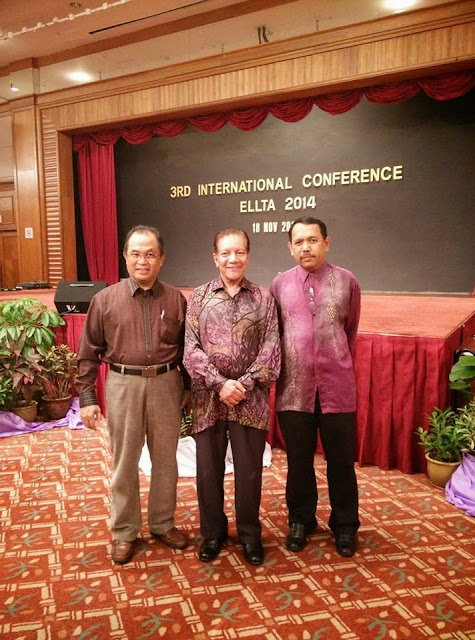
3rd ELLTA 2014

Presenting a paper on 'School culture, leadership and trust: A comparative study in Malaysia, Kazakhstan and South Africa' at 3rd ELLTA Conference 2014. 

Abstract

SCHOOL CULTURE, LEADERSHIP AND TRUST : A COMPARATIVE STUDY IN MALAYSIAN, KAZAKHSTAN AND SOUTH AFRICAN SCHOOLS

Sazali Y., Thiyagarajan A., Maganat S., Aisham S., Nancy M. H. & Takalani S. M.

The aim of this research was to explore the relationship between school culture, instructional leadership and trust among teachers in Malaysia, Kazakhstan and South Africa, and to compare the results amongst these countries. A total of 422 teachers were selected conveniently for the study. The instruments used were School Culture Survey (Gruemert & Valentine, 1998), Principal Instructional Management Rating Scale, PIMPRS (Hallinger, 1987) and Trust Survey (Scott, 1981) which are all Likert-type scale with 1 to 5 points. The School Culture Survey has six dimensions; Collaborative leadership, teacher collaboration, professional development, unity of purpose, collegial support and learning partnership. The PIMPRS has three dimensions; defining the school program, managing instructional program and developing the school learning climate program whereas the Trust Survey is uni-dimensional instrument. Statistics used in the study were mean, standard deviation, t-test, anova and multiple regressions. The alpha Cronbach reliabilities test for the three instruments were between .870 and .978. Generally, school culture was found significantly correlated to instructional leadership and trust in all these countries. However, there were some similarities and differences in school culture dimensions that were correlated to instructional leadership and trust among the countries. The study also found insignificance difference in mean scores of all school culture’s and instructional leadership’s dimensions between Malaysia and Kazakhstan, but there was significance difference between Malaysia and South Africa, and between Kazakhstan and South Africa. It was also found that there was no significant difference in mean scores of trust between Malaysia and South Africa, but there were significant difference between Malaysia and Kazakhstan, and between South Africa and Kazakhstan.

Keywords: school culture, leadership, trust

With presenters from Kazakstan, Nigeria and Malaysia

ELLTA Gala Night : with Dr. Shahri and Prof. Dato' Dr. Ibrahim Bajunid

ELLTA Gala Night : With presenters from Lithunia and Japan

Presenting a paper